Searching for higher ground

IMG_3328

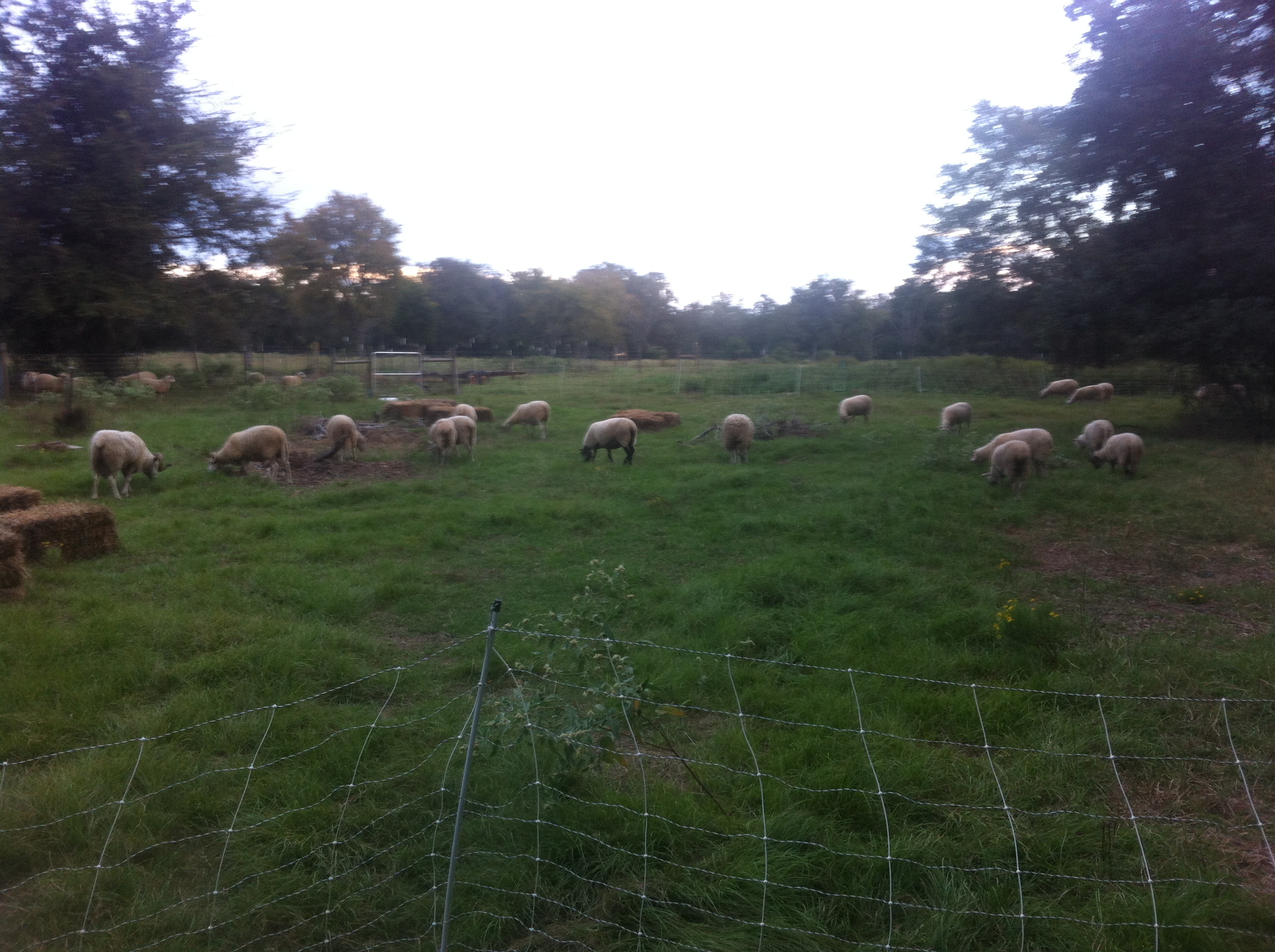
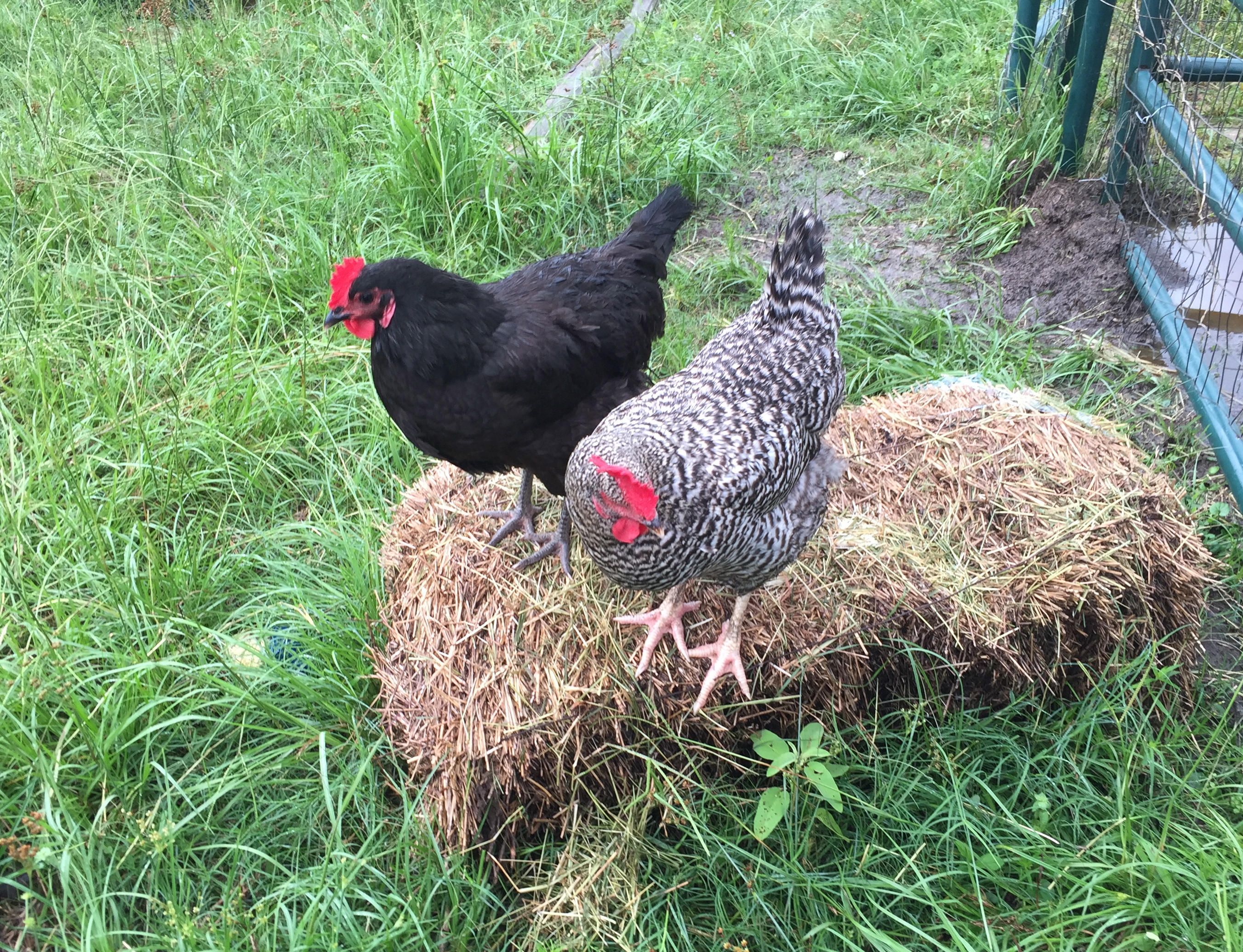
IMG_3411 I do not mind feeding my chickens in pouring rain, especially when it is warm, but I will not move electric net fencing in a lightening storm, so the sheep are going to have to stay in where they are for a while. The sheep and chickens are soaked, like I am, and the prognosis for drying out within the next week is dismal. So far the flowing sheet of water across the pastures has drowned only one 8 week old broiler chicken–one too many. Even our well adapted Gulf Coast Native Sheep do not like having their hooves wet all the time. We spent the evening yesterday doing Famacha testing for internal sheep parasites that thrive in warm wet weather and can be deadly to sheep. The gardens, our June income, are gone, sitting in standing ( and sometimes running) water most of the month, and much of the road is impassible.
Additionally, we suspect the sheep are not getting as much nutrition out of the grass because the rain has leeched so much from the soil.
Farmers are always working in a tug of war with the weather, but this season has been especially challenging. Since Jan 1 we have received over 40 inches of rain, half of it here in May and 9 inches in the last 36 hours. On the bright side this morning at 8:15 am, as I was hooking up the battery/inverter power to the freezer, electric power returned and I expect the internet will return soon and I will post this.
Kenan and I are some of the lucky farmers because we have the opportunity to take decent paying part time off farm jobs. Many farmers do not have that choice. But we still have to work long hours at the farm to keep the animals as happy and healthy as possible and to maintain the systems we have in place for the future of the farm.
This weather calamity to local farms is coming at a time when ethical and health concerns abound from industrial food sources. Your chicken might be from China, your pork may be from pigs that have never been able to turn around in their cages, organic vegetables from foreign countries might have no regulations. The problems go on and on. You have to know your farmer. The farmer has to stay in business.
At Laughing Frog Farm we are going to be fine, but it will take time for us all to recover from this. We all appreciate the customers who continue to support us.
Buy local, healthy, ethically raised food direct from the farmer whenever possible. I want to thank all my customers, past, present and future–and I will see you at the market.
We farmers plan to be around for you in the future.

Gulf Coast Sheep

IMG_2335
We raise Gulf Coast Sheep, a breed known for its heat tolerance, parasite resistance and exceptional flavor. The meat of the Gulf Coast Sheep is so exceptional that it is listed on the Slow Food Arc of Taste.
Our lamb are pastured all the time. We practice rotational grazing on diverse pastures that provide a choice of grasses, brassicas, forbs, honeysuckle, beautyberry, tree leaves, and much more. We call this “forage fed” because they hunt out and eat what they need at that time. When we move them to a new location they might all start eating acorns voraciously for 15 minutes and then run to the honeysuckle before settling to a long graze on the many grasses we have in the pasture. We plant seasonal cover crops to supplement the native grasses and fertilize with compost tea. We never spray herbicides or pesticides.
Our sheep graze in small movable net fenced paddocks and are moved to a new location every one to four days. Their manure is left behind to fertilize the pasture as they move to a new nutritious dinner. Moving them often like this is good for the soil as they grind their manure into the ground, good for the grasses, because they eat quickly, not overgrazing a single species, and good for the sheep, because they get a diverse diet and do not spend much time in the same place with the same food and parasites. They are fed supplements like salt, sulfur, kelp, magnesium, etc. These supplements are fed free choice.

Forage fed lamb is lower in fat and calories, yet higher in Omega-3 fatty acids. It also has a much higher rate of conjugated linoleic acid (CLA). Lamb is an excellent source of zinc, iron, vitamin B12, and carnitine.

Growing fruit trees and berries by organic methods

On Sunday, February 8, 2015 I will be teaching a fruit tree management class.
We will discuss chill hours, root stock, grafting, planting, variety selection, soil reports, soil amendments, fertilization, pest control, compost tea, beneficial insects, pruning, and a lot more. All information will be presented from a holistic, organic perspective.
We will plant fruit trees, berries, and muscadines. We will prune fruit trees and vines.

This class will not include production of annual fruits like tomatoes, melons and strawberries.
Class is from 2:00 until 4:00 and costs $45.00 . sign up for class
supreme

DSCN0661

DSCN0289

Saint Arnold and the Lamb

IMG_2724Not only does Saint Arnold make a great beer, but you can fit a nipple on the screw top. Kenan chose to use a “stout” bottle because this lamb needed a little extra vim and vigor. For those of you panicking, we filled it with milk and supplements, no alcohol. Only two times have we had to take a newborn lamb in, warm it up and feed it. Gulf Coast Native Sheep are very good at birthing and tend to be very good mothers. However, yesterday at 37˚ and raining I found a 3 day old ram lamb, born small to a first time mother, alone 25 feet from any other member in the flock. It was lying on its side, which is not normal. When I felt in his mouth it was cold. Quickly I wrapped him in my coat, took him to the house and put a lamp on him. It took about 12 hours for him to start standing again. With help from the foster grandkids we got him back on his feet. I took him back to the flock at 7:00 this morning and his mother, Loretta Lynne, met me at the gate. Loretta was too young to be bred (rams jump fences) and has a severed nerve in her foot. But all day today we have seen the mother and child reunion. They are together every time I go out. Hopefully she will become the mother all her aunts are.

Blueberry cultivation in the Gulf Coast and Brazos Valley area of Texas

DSCN0289

To produce optimum fruit yield and quality, most deciduous fruit cultivars require exposure to temperatures between 45ºF and 32˚F during the winter. This is known as chill hours. With insufficient chilling, plants do not flower and leaf out satisfactorily during the spring. Growth can be weak and erratic. Low-chill cultivars of blueberries are necessary for southern growers.
Two types of blueberries grow well in Texas, rabbiteye (Vaccinium virgatum) and southern highbush (interspecific hybrids of V. darrowii, V. virgatum, and V. corymbosum). The rabbit eye varieties need between 350 to 650 chill hours and the southern high bush need between 150 to 400 hours.
Both rabbiteye and southern highbush thrive in acidic soils, which contain more organic matter than is usually found in our soils. If mulched, rabbiteye blueberries will usually grow satisfactorily on soils with 1% organic matter, but they perform better with soils that have 2–3% organic matter. Southern highbush cultivars are not recommended for soils with less than 3% organic matter. Consequently, most gardeners will have to supply soil amendments and mulches. Peat moss is commonly used to increase soil organic matter and add acidity in blueberry plantings.
Blueberries need a fungal soil and fungi thrive in acidic soils with a ph of 4.5-5.5. 
If you are installing a commercial plot you should get a soil report follow recommendations. A commercial operation should only be set up in areas with naturally acidic soils. A soil report would also benefit the home gardener. In absence of a soil report and the recommendations that accompany it follow these ideas.

Dig your hole about 3 foot in diameter and about 10″ deep. Replace the soil with compost and peat moss filling the  the hole and building a mound about 6″ high.   Mix two cups of rock phosphate in the soil. If your ph is 7.0 (not unusual for the black gumbo soils) mix one cup of sulfur per plant in the soil, cutting that in half for soils of 6.5 ph. The soil ph will not change quickly and we are wanting to get to a ph of 4.5 to 5.5. It would be best to apply the organic matter and sulfur a year before planting if you can be that patient. If you cannot wait a year, make the amendments now and wait one month or more to plant the blueberry. Soil temperature needs to be over 55˚ for the biological activity to happen.

Plant the blueberry at the same height or 1” higher than it was in the pot–never let it sink lower. Make sure the area drains well. Blueberries need good drainage.  Blueberries have very shallow root systems.
 Blueberries grow well in shade but will not flower and fruit without sufficient sun. Set them in a site where they will get at least 5 hours of spring sun per day. Rabbiteye berries should be planted five to seven feet apart. Southern highbush can be planted 4-5feet apart. Of course, you can plant closer for a hedgerow effect, but it will be difficult to reach all the berries. A mature rabbiteye blueberry plant (7 or 8 years old) can reach heights of 15 feet and be 10 feet wide. Most southern highbush will get about 7 feet tall.
 Mulch the berries with 3 inches of mulch out 2 feet from the trunk but not touching the trunk. Maintain mulch past the drip line as the plant grows. This is for maintaining moisture, moderating soil temperature, adding organic matter and weed control. Weed control is extremely important for young plant establishment because blueberries are shallow-rooted plants that compete poorly with weeds for water, soil oxygen and nutrients. Hand weed only. Do not use a hoe. Use of pine bark mulch and pine needle mulch will also provide additional acidity.

Due to their shallow roots they must be watered often, but should never stand in water. In the heat of the summer, daily watering is necessary so an automatic system works well. Blueberry plants do not produce root hairs necessary for the uptake of water and nutrients. Instead, the plants are entirely dependent on symbiotic relationship with mycorrhizal fungi. The plant provides nourishment for the fungi and the fungi act as root hairs for the plant. For this reason I prefer to avoid chlorinated water.

Blueberries do not require pruning, but remove weak growth and dead branches. During the first growing season, remove all flowers before fruit set occurs. This will prevent fruiting during the first year and promote strong vegetative and root growth and good plant establishment. This is especially important with some southern highbush cultivars that flower heavily as young plants.
 If you prune them for size, do that in the summer after fruiting is complete. I fertilize with micro life fertilizer in March, June and September. Add to that a spray of compost tea in March, May, July, and September and maintain sufficient mulch around the plant. Coffee grounds are good to add to the mulch.
Blueberries, especially the smaller southern highbush blueberries, grow well in containers. Sunshine blue is an especially small variety.  Plant in a wide pot, at least 10 gallons and 18” in diameter. They only need 10″ of soil depth. Increase to a half barrel size in two years.

Different varieties fruit at different times with harvest season extending April through June. Fruit forms on the top of one year old branches.  
Rabbiteye blueberries require two varieties to pollinate and southern highbush berries produce better with cross pollination.

 

Leg of lamb with rosemary and garlic

This recipe is from Whole Foods.
1/4 cup extra-virgin olive oil
1 tablespoon roughly chopped rosemary
2 cloves garlic
Salt and black pepper, to taste
3 pound leg of lamb
2 cups baby carrots
4 medium white potatoes, peeled and sliced
1 medium yellow onion, thinly sliced
1/4 cup red wine
Be sure the meat is at room temperature before you begin.
Place oil, rosemary, and 1 clove of the garlic into a blender and puree until almost smooth. Add salt and pepper. Pour garlic mixture over the lamb, rubbing it into the surface of the meat. Cover and refrigerate for at least 2 hours. Preheat oven to 350°F. Arrange carrots, potatoes, and onions in the bottom of a roasting pan. Pour or spoon marinade that has dripped off the lamb onto the vegetables and toss well to coat. Season with salt and pepper. Cut small slits into the top, sides, and bottom of the lamb. Thinly slice the remaining clove of garlic and place a slice into each slit. Set the lamb in the pan with the vegetables and pour wine over the top.

Roast lamb and vegetables for 45 minutes, covered, and an additional 45 minutes, uncovered, or until lamb is done to your liking. Transfer lamb to a cutting board and let it sit for 20 minutes.

Meanwhile, check the vegetables. If they are not yet tender, cover and return to oven while lamb is resting to continue roasting until tender. Transfer lamb and vegetables to a serving platter and drizzle with pan juices.

Slow roasted lamb shoulder

One 3 to 4 pound lamb shoulder

1 tsp salt 1 tsp black pepper

4 sprigs of rosemary about 4 inches long

Fresh oregano

1 lemon cut in half

Preheat oven to 450˚. Make sure the lamb is at room temperature before you begin.  Rub lamb all over with 1 tablespoon oil, 1 teaspoon salt and 1 teaspoon pepper. Put about 3 leeks, cut in half, or one large onion, sliced, in the bottom of a roasting pan and set lamb on top. Scatter garlic, rosemary and oregano over the lamb and leeks, and then squeeze lemon juice over lamb and toss lemon halves into the pan. Cover the pan snugly with foil and roast for 30 minutes. Reduce the oven temperature to 325°F and continue to roast, covered, for 1 1/2 hours.  At this point add vegetables like quartered potatoes, florence fennel, turnips, cauliflower, etc and roast for two more hours.  Let the lamb rest for twenty minutes before serving.

Bone broth

This is just about the same recipe that was in a New York Times article about bone broth.

5 pounds of bones with some meat attached
2 tablespoons olive oil
2 tablespoons tomato paste
¼ cup apple cider vinegar
3 carrots, peeled and coarsely chopped
3 celery stalks, coarsely chopped
2 onions, halved and peeled
2 cups tomatoes – fresh or boxed
1 head garlic cut in half crosswise
2 bay leaves
1 bunch fresh flat-leaf parsley
½ bunch fresh thyme
1 tablespoon black peppercorns
Heat oven to 350 degrees. Place meat and bones in a pan. Coat in olive oil and brush with tomato paste. Roast until browned, 30 to 35 minutes.
Put roasted meat and bones in a 12-quart stockpot and add vinegar and enough cold water to cover by 3 inches. Bring to a boil, then reduce to a low simmer, uncovered, for 2 to 3 hours. While simmering, occasionally skim fat and foam from the top using a ladle.
Add all the remaining ingredients. Continue to simmer, uncovered, for a minimum of 12 hours or up to 72 hours. You can bake it at 200 degrees instead of using the stovetop. I do that if the dogs are in the house. Strain broth. Once broth has cooled, store in the refrigerator in an airtight container.

https://www.cognitune.com/bone-broth-benefits/

Saint Arnold and the lamb

IMG_2724Not only does Saint Arnold make a great beer, but you can fit a nipple on the screw top. Kenan chose to use a “stout” bottle because this lamb needed a little extra vim and vigor. For those of you panicking, we filled it with milk and supplements, no alcohol. Only two times have we had to take a newborn lamb in, warm it up and feed it. Gulf Coast Native Sheep are very good at birthing and tend to be very good mothers. However, yesterday at 37˚ and raining I found a 3 day old ram lamb, born small to a first time mother, alone 25 feet from any other member in the flock. It was lying on its side, which is not normal. When I felt in his mouth it was cold. Quickly I wrapped him in my coat, took him to the house and put a lamp on him. It took about 12 hours for him to start standing again. With help from the foster grandkids we got him back on his feet. I took him back to the flock at 7:00 this morning and his mother, Loretta Lynne, met me at the gate. Loretta was too young to be bred (rams jump fences) and has a severed nerve in her foot. But all day today we have seen the mother and child reunion. They are together every time I go out. Hopefully she will become the mother all her aunts are.

Grapefruit and watercress salad

4 large grapefruits (mine came from Barry Farm)

1/2 cup maple sugar
 (of course you can substitute, but this sugar is great)
2 teaspoons red wine vinegar
 (try and experiment with different vinegars)
1/2 teaspoon Dijon mustard

1 garlic clove, minced

1 tablespoon minced fresh mint (the apple mint seems to be the best for this)

1/2 teaspoon salt (I use Himalayan or Celtic sea salt)

1/2 cup olive oil

2 bunches watercress (about 6 oz), trim off the tough stems (we grow it in the aquaponics system)
A bit of arugula
 (it grows 12 months a year around here)
2 large ripe avocados, pitted, peeled, and cut into 1/2-inch cubes (I am afraid I have to import these)
Fresh ground black pepper
• Cut the peel and the pith off two of the grapefruits. Slice the grapefruit into 4 rings each and place them on a parchment-lined platter.
• Heat a skillet medium high, put the sugar in a bowl, dredge the grapefruit slices in the sugar and when the skillet is piping hot, panfry the grapefruit slices for 1.5 to 2 minutes each side, until they are golden and caramelized.  Transfer the grapefruit back to the platter and refrigerate. They tend to want to fall apart so be careful turning them and moving them.
• Juice the other 2 grapefruits into a small saucepan.  Bring to a boil, quickly lower the heat to medium, and simmer to reduce the juice to 3 tablespoons, 8 to 10 minutes.  Transfer the juice to a blender and cool. 
• Make the vinaigrette by adding the vinegar, mustard, garlic, mint, and 1/2 teaspoon salt to the blender and slowly pouring in the oil with the blender going.  Salt and pepper to taste.
• Combine the watercress, arugula, avocado, and enough vinaigrette to lightly coat the salad.  Mix carefully so the avocado does not become part of the liquid dressing.
• Cut the grapefruit slices into cubes. If you make them too small they will become mush.
• Divide the salad on serving plates and top each salad with grapefruit pieces and serve.