
Today I did my morning chores, planted some more winter crops, had some problems of sheep running wild, and when all was under control I sat on the low boy trailer to take a break when this leaf fell on my leg. I realized that I had spent much of my life doing art and growing plants and animals and that I had never created anything as beautiful as something that just fell from the sky and settled on my leg.
\
Maintaining genetic diversity for the next generation
 A few weeks ago I heard Paul Bosland of the Chile Pepper Institute at New Mexico State University, talk peppers on the radio. He was outlining a problem in the chile industry. Years of drought and competition from China, was hurting the economy of small farms in the state. Each year seeds from the most productive plants were saved and used to grow next year’s crop. The plants were not selected for taste, drought tolerance or pest resistance, but only for productivity. He asked the national seed storage lab in Colorado to go into their repository and pull out of liquid nitrogen, some of the original seeds of the New Mexico Chile, over 150 years old. They propagated those and are selling small samples of these new, old seeds. The only way to save the cultivar is to grow it. I have a packet.
One of the many problems with monoculture is the lack of seed varieties that farmers are choosing to grow. When our climate changes, the seeds currently in use might not adapt to the new conditions. New pests and weeds might move into the area. New diseases could spread quickly through the entire agricultural industry. Nature provided us with seeds that can tolerate, adapt and survive, but are we letting them go extinct by not using them? If, as a farmer, I grow 10 different kinds of winter squash or green beans I stand a better chance of surviving a drought or an insect/disease infestation and I increase the odds even more if I grow something that my neighbor does not.
The same problem exists in animal agriculture. Most of our beef comes from two cattle breeds or crosses of those two. The semen of one bull might be used in 10,000 dairy cows.
D. Phillip Sponenberg and Carolyn J Christman in A Conservation Breeding Handbook described our situation. “Livestock breeders of today inherit extraordinary genetic wealth in the form of distinct breeds of domestic animals. In the past, it was certain that every generation of breeders would serve for a time as stewards for this treasure. … Times have changed, however, and the very traditions of animal breeding are now threatened… As a result, future generations may not receive the genetic treasure we have inherited. The genetic diversity essential to selection of animals, environmental adaptation, and maintaining agricultural opportunity may be lost.” *
The Livestock Conservancy recognizes 14 breeds of sheep that they have placed on the threatened or critical lists. One of those breeds is the Gulf Coast Native Sheep, the sheep we raise. They are adapted to an environment that is tough on sheep. They are resistant to parasites and hoof rot, are tolerant of our summer heat, and are vigorous foragers. They fell out of favor after the development of anthelmintic medications made it possible to bring in larger sheep, less adapted to this area. Larger sheep grew faster in feeder situations, providing more meat and a quicker turnaround. With our commitment to minimize the use of medications and to feed the sheep entirely on forage, the Gulf Coast Native Sheep seemed like the perfect breed to conserve. And the only way to conserve the breed is to raise it as an agricultural product. Without consuming these diverse breeds of sheep, goats, poultry, hogs and cattle they will vanish into the history books with the dodo bird. We cannot preserve their genetic diversity in a seed bank. When medications become ineffective, companies will develop stronger and less environmentally safe products, farmers will give higher doses of medications and the diseases, like weeds, will continue to adapt. Where do we hit the wall? There are animals out there that can exist in many different conditions, and we have the obligation to future generations to save them.
We attempt to do our part to preserve our genetic diversity through rare breeds and rare seeds. We experiment with diverse crops, revive unusual species, and support companies that do the same. Next we will turn our attention to rare poultry.
*A Conservation Breeding Handbook by D. Phillip Sponenberg and Carolyn J Christman
A link to the Livestock Conservancy – http://www.livestockconservancy.org
I have linked three places to purchase rare, saved seed and the first one is in my hometown of Berea, Ky.: Sustainable Mountain Agriculture Center http://www.heirlooms.org
Baker Creek Heirloom Seeds http://www.rareseeds.com
http://www.seedsavers.org this is, of course not an extensive list, just a few I know of.
For more information on our sheep breed: http://www.livestockconservancy.org/index.php/heritage/internal/gulf-coast
Slow food’s ark of taste lists the gulf coast sheep and many other different foods that are not found in the grocery store. https://www.slowfoodusa.org/ark-of-taste?cp=&q=&qa=g#results
Here are links to a few talks on related subjects.
This is just one of Vandana Shiva’s many videos. http://www.bing.com/videos/search?q=vandana+shiva&qpvt=vandata+shiva&FORM=VDRE#view=detail&mid=9508E3AC8C19A9F76ADB9508E3AC8C19A9F76ADB http://www.ted.com/talks/cary_fowler_one_seed_at_a_time_protecting_the_future_of_food http://www.ted.com/talks/allan_savory_how_to_green_the_world_s_deserts_and_reverse_climate_change
Thunder and lightning, very, very frightening
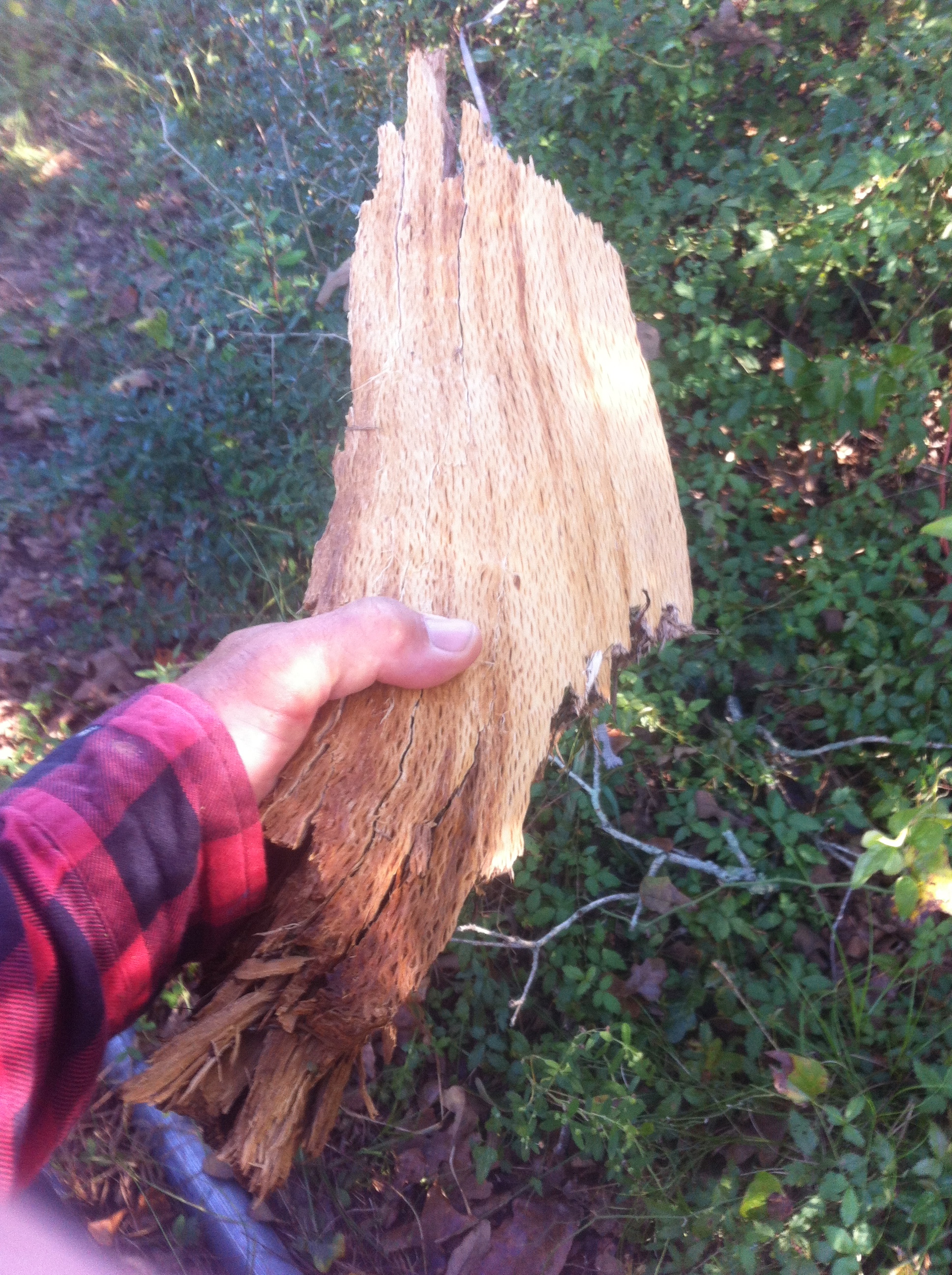
A lightning strike destroyed two large trees 50 feet from our house and fried our internet modem on Sunday. Pieces of the tree, weighing 50 pounds, were found 25 feet from the trunk, and that piece in my hand was found 75 feet from the center of the strike. Truly awesome. And scary. I did not move the sheep in their electric net fencing that night. They might never get moved again on stormy days.
When life gives you splintered trees, build a split rail fence.
We had a large tree come down just southwest of our house in May after what looked like a twister. Mother nature is not gentle. 



The Business Side of Farming

This one is over but I will be presenting this class again in the spring.
Sunday, Sept. 28, from 1:00 pm until 5:00 pm I will be teaching a class for those that want to farm and want to make money at it. This class will address the planning of a farm business, including setting your goals, writing a business plan, pricing, bookkeeping, merchandising, promotion, funding sources, and resources available from government and private organizations.
Farmers plan to fight the weather and the insects, but it is usually the business side of the operation that causes the most problems. Many do not really know if they are making progress because they have not set solid goals or have not kept competent records. With realistic planning, good records, niche marketing and special products it is possible to make a living farming. Whether you grow an unusual product or a better product, opportunities in the food production business exist. The key is understanding the three legged stool of business– production, marketing and finance. It will always be hard work, but with planning, it can be financially rewarding. Class is from 1:00 pm until 5:00 pm and costs $45.00. You can register by email and pay at the event.
Ali baba and the 40 sheep
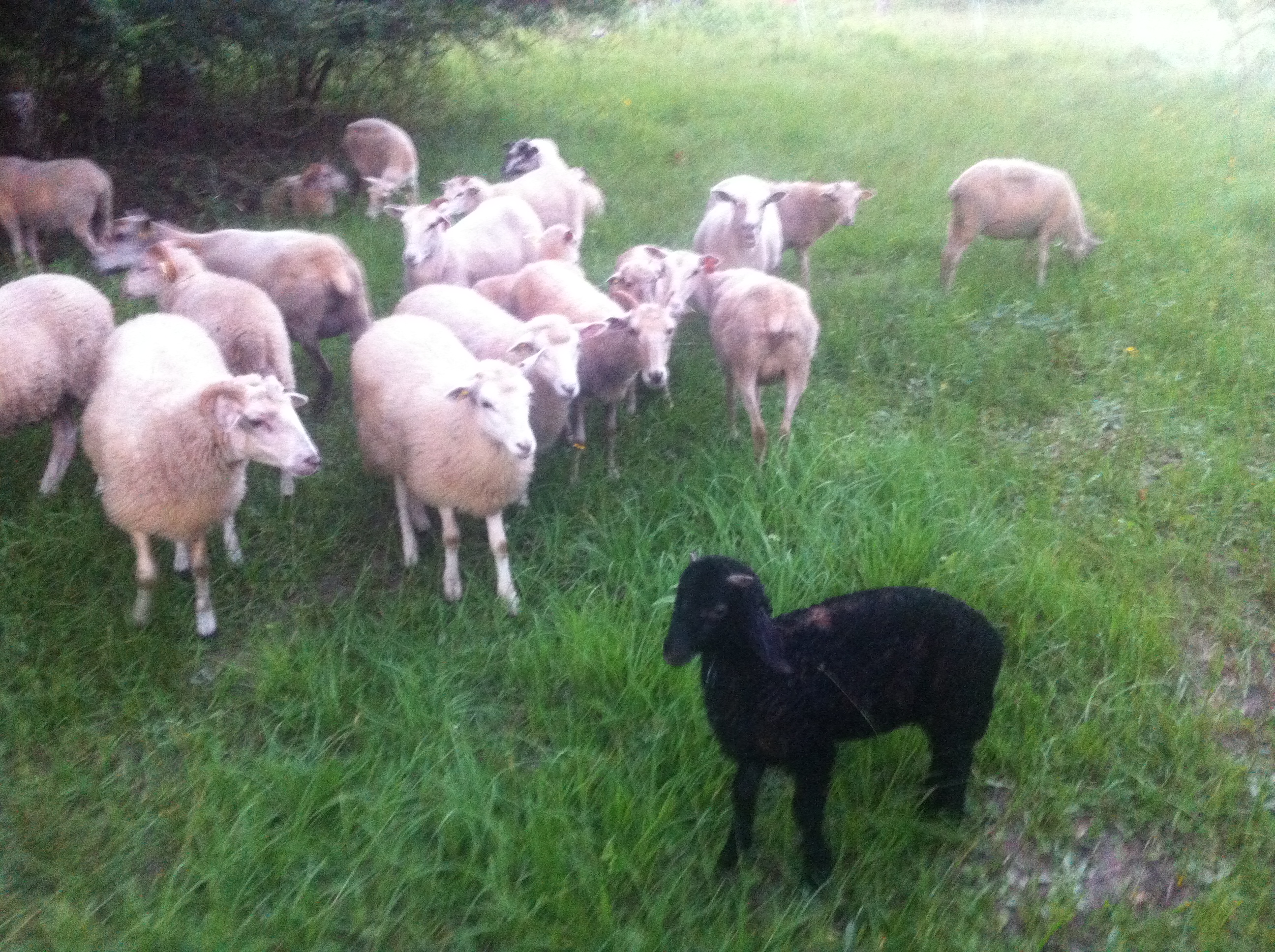
We recently rescued a Karakul ram lamb whose mother died. We named him Ali Baba. We have bottle fed him and raised him with the dogs, which the lamb seemed to think was just fine. The dogs never were too excited about having a ram as their colleague. This week we decided to integrate the little ram into the flock of sheep. We figured that he would have a rough time and monitored the situation carefully. He was sad and lonely but the reaction of the other sheep was the surprise. They were fearful. They escaped their electric fences to get away from this little ram. This ram was 30 pounds and the other sheep averaged about 100 pounds. One of the things I like about sheep is that they are creatures of instinct. If you can interpret their instinctual response you will know what they are doing. I never suspected that they would react the same to a little ram lamb as they react to a dog. Sit! Stay! Baa! He is back with the dogs.
How do we farm without land?
 One of the most difficult hurdles in farming is access to land. If you live in a rural area, a spread-out city like Houston, or a blighted city with many vacant lots it is apparent that there is no lack of land. The problem is that the land belongs to someone else. It is possible that the new program for farming does not include owning the land.
Governments, corporations, and wealthy land owners sit on land that is unused, save the occasional criss-cross of a lawnmower, costing the owner money and increasing greenhouse gasses. A much better use of that land would be to give some of the many people who would like to farm the opportunity to use it. The government, corporation or land owner would benefit from the bragging rights of presenting an organic garden and the farmer would make some money with the produce. The problem arrises when we bring up the word profit. Governments and large corporations, in particular, do not like for-profit entities on their property unless they are getting a cut. And we all know that the profit in farming does not leave a lot to share.
A solution to this would be to form a non profit organization that helps promote organic food, gardens, children in gardening, etc. This organization could pay the workers in the garden a modest wage, pay themselves a modest salary, and donate the rest to gardening education which they would do on a Saturday or a field trip, etc. Of course, like most business owners, they are taking on the risk, not knowing if they can make enough to make it worth their while. All proceeds would end up in the hands of the people who did the work, and that would not be a lot. Being a non profit, if you got to the point that you were making too much money, that would be used to expand–work more land and hire more people.
The land owner could be assured that the sign at the garden, introducing a nonprofit organization, would reflect an atmosphere of altruism. People farming would make money, unused land would be made productive and the people/governments/companies would feel pride in their reallocation of resources. The land owners would be responsible for paying water and taxes, but they were already doing that.
If one company turned a small lot into a beautiful garden the competing and neighboring companies would follow. Of course the farmers would have to keep their gardens looking better than my gardens in order to please the owner who is used to an accepted view of landscaping. This might require fund raisers to make beautiful fencing and mulched paths.
A model of land leasing is already in use with livestock that graze power company easements and farms. These typically lease for $1.00 per year and give a land owner the opportunity to apply for agricultural valuation on their real estate taxes after five years. Maybe the tax authority in counties and cities could work on such an incentive for urban land. Multi-year leases would be necessary because of the work involved in improving the soil.
Such an enterprise would require a business plan and all the bookkeeping forms that go along with getting a non-profit off the ground and approved by the IRS, but it could be a game changer. Just look at what Growing Power has done in Milwaukee. It has companies asking them to take unused land. They do a fundraiser to provide a greenhouse (it is cold in Milwaukee unlike Texas) and use paid untrained labor under the direction of knowledgeable employees to build and maintain the facilities. They get lower unemployment, better land use, and provide farmers markets in underserved areas.
These land owners have spent a lot of money on landscaping that is not providing food for people, chickens or sheep. Turning these into farms could help the land owner, increase local employment, improve the environment, and give opportunities to farmers. It would also help the dietary health of a community at little to no cost.
We need new solutions when land ownership is beyond the financial reach of farming. If your business plan does not allow for enough profit to buy property you should not be excluded from farming. We need more farmers, particularly younger enthusiastic ones. And it does not take a lot to be younger than the average farmer in the United States. I have heard figures ranging from 55 to 65, and rest assured I am one and I welcome the company of younger colleagues.
Bare Nekkid Ladies
Wednesday was shearing day at the farm. Fifteen ladies, and one ram were not so happy about it, but they will be much cooler this summer without that 10 pounds of wool. I suppose they will thank me then. We finished the working pens about 2:00, Danny, the shearer, arrived about 3:00 and was gone by 4:30. For our first time it went well, but I did have to carry one 120 pound ewe to the chute. I know I was more tired than Danny, just because I did not know what I was doing. Next year it will go more smoothly. Now we have to think about weaning.
Eat your vegetables, don’t smoke your weeds
I caught a story on the radio today about the effects of recreational marijuana use on a student’s attendance records and grades. It seems that students in Colorado who regularly smoke the weed are less likely to show up at class and make poorer grades. “What!! You spend your time and money researching something we all figured out in the 70’s”
Then I thought, what if they did a study concluding that people who eat fast food 10 times a week were more likely to have diabetes? Or what about a study that showed that eating a diet rich in locally grown fresh vegetables and grass fed meat would lower your cholesterol and blood pressure. Those studies would be no less ridiculous to me than one that says that marijuana makes you more interested in a dripping faucet than a calculus equation.
I assume that everyone knows that most of our health problems are related to our diet. If there are people out there that do not understand the relationship between what we eat and our health, I suggest that behavior has consequences. Marijuana consumption can make you consume junk food and the junk food can cause diabetes, high cholesterol, and high blood pressure, those can result in high medical bills. Pharmaceuticals will mask the symptoms but not cure the effects, side effects of the legal drugs will cause you to be prescribed more drugs.
The question is, is it the fault of you consuming the marijuana or the fault of you not eating your vegetables. (Either way you should have invested in pharmaceutical companies instead of majoring in theatre.)
Some people even eat fast food without the influence of munchie inducing drugs.
For a few million dollars in research money I will collect the statistics, coo-elate the conclusions and produce a paper evaluating whether you should expect to get out of your body what you put into it. Or you could do like me and say “They did a study on what?”
editor note:
occasional use of junk food can be hazardous to your health
marijuana makes you very hungry and too lazy to cook–and that is a good thing because cooking would be hazardous
Knowing I have followers whose first language is not English I must say that there is satire in this post.
Food without a plot
–
In 1973-74, working as a scenic designer in Mexico City, I earned extra money dubbing movies on Saturday mornings. A group of us English speakers would meet at a studio to serve as vocal “extras”. All the main scenes had been dubbed by the pros, and we were there to fill in the bit parts. We would be given our lines, see a quick preview, and they would play the scene while we said lines like “I didn’t do it”. We never knew the plot, the motivation or the title of the movie.
Some people have that kind of relationship with their food. Cooking is not a family experience, shopping is like speed dating, and the garden is a decoration. Does it matter that the food you ate was unhappy, tortured, polluted, in poor soil, grown by an exploited farm hand, cooked and served by people disappointed with their jobs and eaten alone in a car with the dinner conversation on a cell phone?
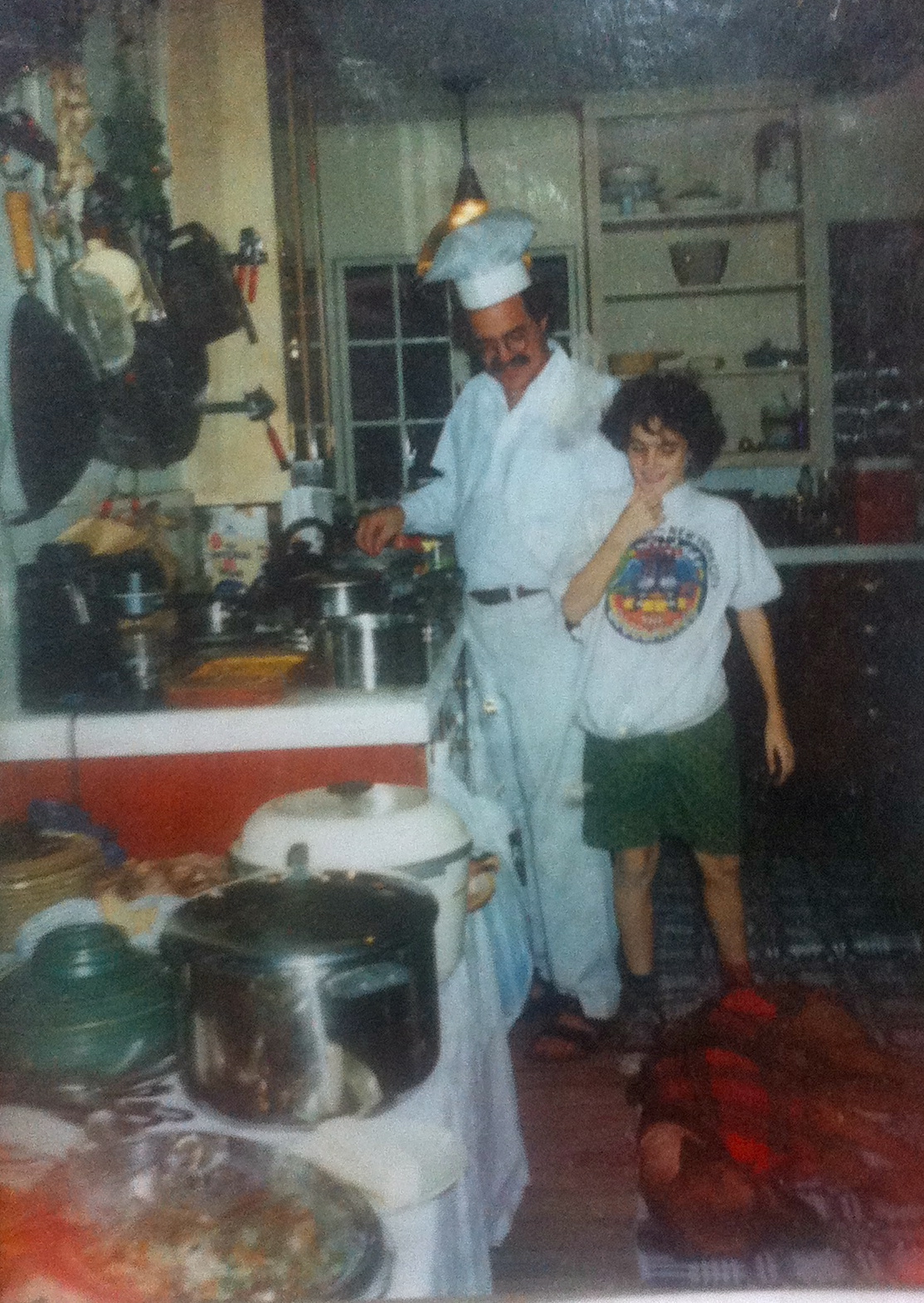
Food is a glue for a society. When we get together, it is around food. I met a man named Gerardo Marin from the group Rooted in Community. He told the story of his grandmother making molé. It took a long time to make the meal. Her recipe had 52 ingredients, each with their own story. The day long process produced food, conversation and a connection to that meal through family history. I grew up eating out of our family garden. We all snapped “greasy beans” together from seeds that had been saved for generations. I still grow those same beans and cook them the same way my grandmother did. Food at our house has always been about knowing where the food came from, knowing it was handled with love, cooked with conversation and eaten as a family who was happy to be part of the story. The last time I saw my grandmother at her home she was 95 and making grape juice from the grapes she had picked that morning. She was straining the boiled and crushed grapes through a cloth that was tied to a broomstick, suspended between two ladder-back chairs. When I think of Thanksgiving, I think of Dylan, Brett, Kenan and me spending the entire day in the kitchen together.
Life is too short for fast food. I can’t miss out on the fun, the companionship, the meaning, and the memories. It would be like making movies without a plot.
Texas spring crop massacre
Today is the fifth time that we are starting to plant tomatoes. We have lost peaches and plums, due to frost and cannot plant corn and beans yet. Too much mud followed by unseasonable freezes have interfered with our schedule. I make decisions easily but I was never very good at making the right decision.
When I was young and lived in Austin I designed the sets for quite a few movies. They all paid about $500 for two weeks of round-the-clock work with promises of residuals. I never saw a viewing of any of the movies I worked on in Austin, much less residuals–not even from gems like “Vampires, Second Blood”. One night in 1974 I got a call in the middle of the night asking if I could come down and become the scene designer on a new film. They had no money and were not paying any salaries, but would pay residuals. I had bills to pay and had no interest in working on some movie for some mythical future payment. Before I hung up I was told the title. It was so ridiculous and I knew I was right to refuse the project.
Sometimes you know you are making the right decision. I am planting tomatoes today. It is the right decision.
And of course I refused to design the sets for a movie called “The Texas Chainsaw Massacre” for nothing other than royalties. Wouldn’t you?
True story.
 Laughing Frog Farm