Today is the fifth time that we are starting to plant tomatoes. We have lost peaches and plums, due to frost and cannot plant corn and beans yet. Too much mud followed by unseasonable freezes have interfered with our schedule. I make decisions easily but I was never very good at making the right decision.
When I was young and lived in Austin I designed the sets for quite a few movies. They all paid about $500 for two weeks of round-the-clock work with promises of residuals. I never saw a viewing of any of the movies I worked on in Austin, much less residuals–not even from gems like “Vampires, Second Blood”. One night in 1974 I got a call in the middle of the night asking if I could come down and become the scene designer on a new film. They had no money and were not paying any salaries, but would pay residuals. I had bills to pay and had no interest in working on some movie for some mythical future payment. Before I hung up I was told the title. It was so ridiculous and I knew I was right to refuse the project.
Sometimes you know you are making the right decision. I am planting tomatoes today. It is the right decision.
And of course I refused to design the sets for a movie called “The Texas Chainsaw Massacre” for nothing other than royalties. Wouldn’t you?
True story.
Author: Laughing Frog Farm
Ta-dah! or not ta-dah!
 When son Dylan was about four or five he saw my ”to-do” list and said “ta-dah!” with theatrical fanfare. Obviously he was influenced by the actors, opera singers and hams around him. Since then my daily lists have always been titled “ta-dah!”. There is a certain appropriateness to this. Every day I look at my list and assume I will get this, that and those done, but the forces in the universe converge to impede my progress. I adjust, retool, get out the duct tape and baling wire, walk around and evaluate every plane, and when something is finally complete–“ta-dah!”. So when the tomatoes get planted, when the new chicken house is complete, when the fence finds its’ way around the garden and the new raft beds in the aquaponics system are complete, I have nothing to say other than ”ta-dah!”. I then head back to the blackboard where new projects are waiting for their ta-dah! moment .
Trees, trains and weeds

Over the years I have been asked to paint Thai palaces and Parisian street scenes–dragons, monkeys and the river styx. Usually things as unfamiliar to me as three headed camels. Last week I was asked to paint native Texas plants on some cabinets. This was great because I understand the way a petiole on a trumpet flower attaches to the stem. I was pruning persimmon trees the day before I painted one on a door. It is much better when you understand something than when you only see its shape.
In Austin in 1974 I was designing and building the scenery for Shakespeare’s Romeo and Juliet at Zilker park while working on the scenery concept for my next project, A Man’s a Man by Bertolt Brecht at the University of Texas. I left the park heading for the UT library to research 1930’s train cars, one of the visual concepts I had for the Brecht play. Walking back to campus I was stopped by a train at Town Lake. I stood impatiently, wanting to get to the library to see photos of trains and–wait–this is a real one. At that point the whole concept of the play changed. It was not a photo that made a railroad, but the noise, the rhythmic clanging, flying pebbles, dirt, soot, and power that defined the concept. And I could add the smoke they had in 1926. The director and I developed a solid concept to present this rather rough-hewn script because a train stopped me from keeping my hectic schedule.
When I work to understand something, not just react with an accepted quick cure, everything comes together. A spot on a leaf or insect damage are a clue I need to decipher, not a call for a bottle of chemicals. This weed tells me of a potassium deficiency, that sheep is not acting like the others. Oh no, not enough calcium in the tomato’s root system. I have to observe to be successful on the farm. Just like an artist. So the next time someone asks me to paint a Parisian street scene, I will have them send me to Paris.
Organically grown potted plants for Houston
Most nursery plants are grown in artificial conditions in a sterile environment with heavy applications of nitrogen fertilizer and synthetic fungicides and bee killing pesticides. This intensive care system eliminates natural soil biology, creates a dependency on artificial stimulus and discourages the plant from developing the extensive root system it needs once it is out of the ICU. You purchase a poorly adapted, chemically dependent plant not capable of fending for itself.
We start with a special organic soil mixture to grow our organic plants. We start with very little nitrogen fertilizer because we do not want to promote excessive green growth early in life. Once the root system is well developed we begin to limit the water and add a bit of nitrogen in the form of fish emulsion in our compost tea. The result is a plant that is ready to head out on its own and produce.
Our potting mix:
20 gallons compost, Screened
5 gallons perlite
5 gallons vermiculite
1 cup rock phosphate
1 cup cottonseed meal
1 cup liquid fish
1 cup liquid seaweed
Mix it well and wet it with water or compost tea and let it sit a few hours before using.
We might add the following:
lava sand
cornmeal
greensand
kelp
molasses
epsom salt
We use a better draining mix for the succulents, lavender, thyme and rosemary.
Real farmers don’t drive pickup trucks
Today I pay homage to my grandfather, James Miracle and my grandmother Myrtle. They had a tractor and a 1949 dodge ram car which made the 5 mile trip to town once a month. They went to buy toilet paper, corn flakes, flour and sugar.
They raised cattle, tobacco, corn and a large garden, bigger than my market garden. They fertilized with manure. No feed bags nor outside hay ever had to be unloaded. If you need it, you grow it on the farm, putting up hay, corn–jams and beans. Milk came from cows, eggs from chickens, vegetables from the garden or the cellar, and the freezer was always stocked with your meat. Feed for animals came from the earth.
I drive a pickup truck. I have a long way to go to reach the heights of my grandfather. Someday you will know I have arrived when I no longer own a truck.
Aquaponic celery
Here is a profile of my different aquaponic grown celery plants and one soil grown.

The first celery plant on the left was grown outside in soil in a wicking bed in winter sun.
The second one plant was in an aquaponic raft bed, using ebb and flow, outside in winter sun
The third plant was in an aquaponic media bed, using ebb and flow, outside in shade all day.
The fourth was in an aquaponic media bed, using ebb and flow, outside in winter sun.
The fifth one was confined to a 3″ pot in a constant aquaponic flow in a greenhouse.
There were many variables that affect the outcomes and all will be discussed at my classes on aquaponics.
Mob grazing and hugelkultur
We have had some long periods with less than normal rainfall lately, most notably October of 2010 until October of 2011 when we had 8 inches of rain in 12 months at the farm. The ground remained drier than normal until the fall rains in 2013. And we mismanaged our pastures. Hay was expensive and hard to find and we owned the most destructive of all livestock–horses. We half-heartedly tried rotating them, but ended up with no grass anywhere. We knew it was time to put in to practice what we had studied. We planned on a mob grazing program, something we first witnessed in 1990 in Nebraska, from a farmer who had studied the teachings of Alan Savory. For those who want to know more about his studies you might check out his TED talk.
We purchased a small flock of sheep, because small ruminates that eat both grass and browse seemed to best suit our situation. These sheep are crowded in new pasture most every day, quickly eating the tops of the minimal grasses that are there, grinding in the grass seed that we throw out under their hooves, mulching weeds they don’t eat, and fertilizing with their little rear manure spreader. After the sheep leave an area we can then put the traveling chickens on the pasture to clean the bugs from manure and select some tender grasses to improve the quality of their eggs.
Another gift from the drought is lots of dead oak trees. Many of these have now fallen and we are beginning to pile up the logs, throw hay on top and put the livestock in those areas, climbing around, eating hay, spreading their fertilizer and mulching. We are using some of the techniques involved in hugelkultur. Traditionally hugelkultur involves digging and partially burying the logs, but I feel we will get the decay we need without the labor, though it may take a few years for these to become the rich hummus beds we anticipate. In April we plan to plant winter squash because of its vining habit. It should completely cover the logs, offer mulch, retain moisture and provide us with a crop from an area that was never plowed, fertilized by a person or weeded. These areas should never need watering because the decaying logs and mulch should store enough moisture to survive another drought. Their mounds should also reduce runoff during any monsoons.

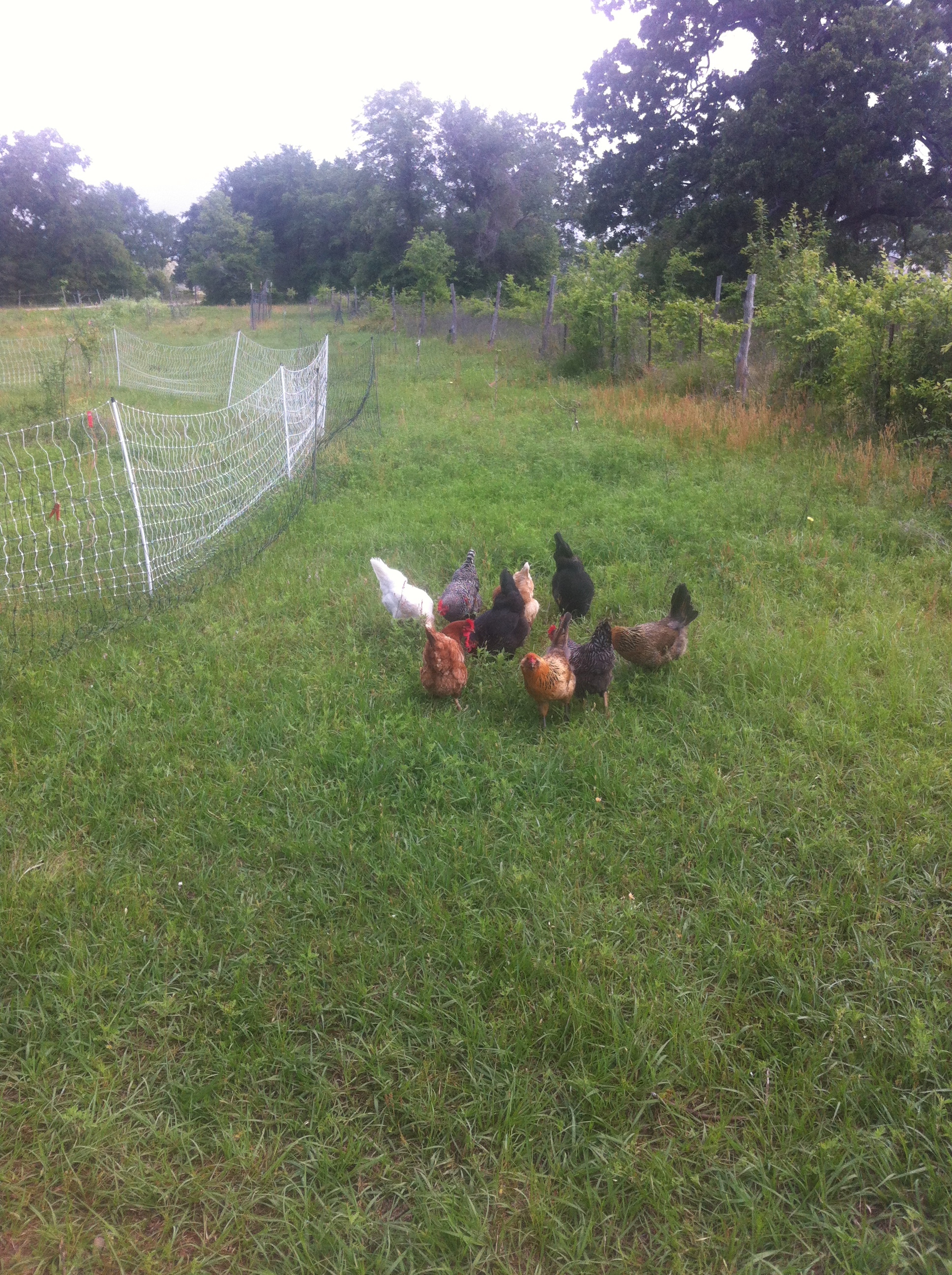
We are always looking for ideas to improve our farm, reduce inputs, and help our bottom line without backbreaking labor. We already have enough backbreaking labor.
Giving thanks on Thanksgiving
I went outside this morning at first light, about 6:30, to check out the effects of the frost. 28˚. We had given the sheep a sheltered area, but they were all grazing in the open pasture–their frosted wool backs glimmering. I let the hens out. They were fluffed up looking the size of meat birds, more excited than usual. The greenhouse with the tilapia had stayed above 50˚ and the water was still 60˚. Success! All our short haired dogs, that had the rare opportunity to be inside last night, were running full tilt while we went to each livestock area to break the ice layer off their water supply. I wanted to feed the horses some wet alfalfa pellets, but the hose was frozen, so they just got dry pellets. We southern Texans do not do winter on Thanksgiving very often.
When I was a kid Thanksgiving was all about eating. My mother was the perfect southern cook and much of the meal came canned and frozen from our summer garden harvest.
When we had children in Houston the holiday was all about the kids and me cooking together, while Kenan and Granny tried to keep our mess in check in anticipation of the large family gathering.
Today, this Thanksgiving is about growing the food here on the farm where it is quiet, cold and peaceful. It is about knowing the soil, working with the weather, avoiding the pests, understanding the animals and enjoying one another. Of course I will cook and I will eat.
I hope the best for everyone.
I am thankful.
Permaculture at Healing Hands
Yesterday a few of us went to the Healing Hands Ranch in Willis, Tx. This ranch brings in men struggling through poverty and addiction, often homeless, often veterans, and provides housing, job training and an entry back into mainstream society. This group is proposing building an eco village with cob housing, gardens, aquaponic greenhouses–a permaculture homestead with low cost housing, a connection to nature, minimal energy needs and on site employment. This could be a model for future development. This will take some time and they will need many volunteer hands to join in. It is too early to ask for help, but keep them in mind. We all will be working on design proposals in the next few months and hope to begin building early next year. Building cob houses requires more manual labor than materials. Using the unemployed, underemployed and homeless and paying them a living wage will not only help them immediately, but will also provide some skills for future employment. We would like to see families and individuals in an affordable, environmentally sustainable community.
The Wictim Theory
Boris Aronson, a Russian/American scene designer, was teaching a seminar at the University Of Texas in 1974 and one student asked what I thought was a stupid question. “Mr. Aronson, what is your theory of design”
He replied something like this in his thick Russian accent– “My theory of design is the wictim theory. Last week we began developing the style of a new Broadway show and the costume designer was not there. She could not promote her ideas, so everything went my way. This week I am here in Austin and we have another meeting and my ideas will not be promoted. Last week she was the wictim and this week I am the wictim. If you want to get somewhere you need to be present and constantly advocate your vision. If you are not there the ideas of others will prevail and your vision will become wictim to the plans of others.”
Don’t be a victim of the plans of big Ag, big Pharma and the industrial food system.
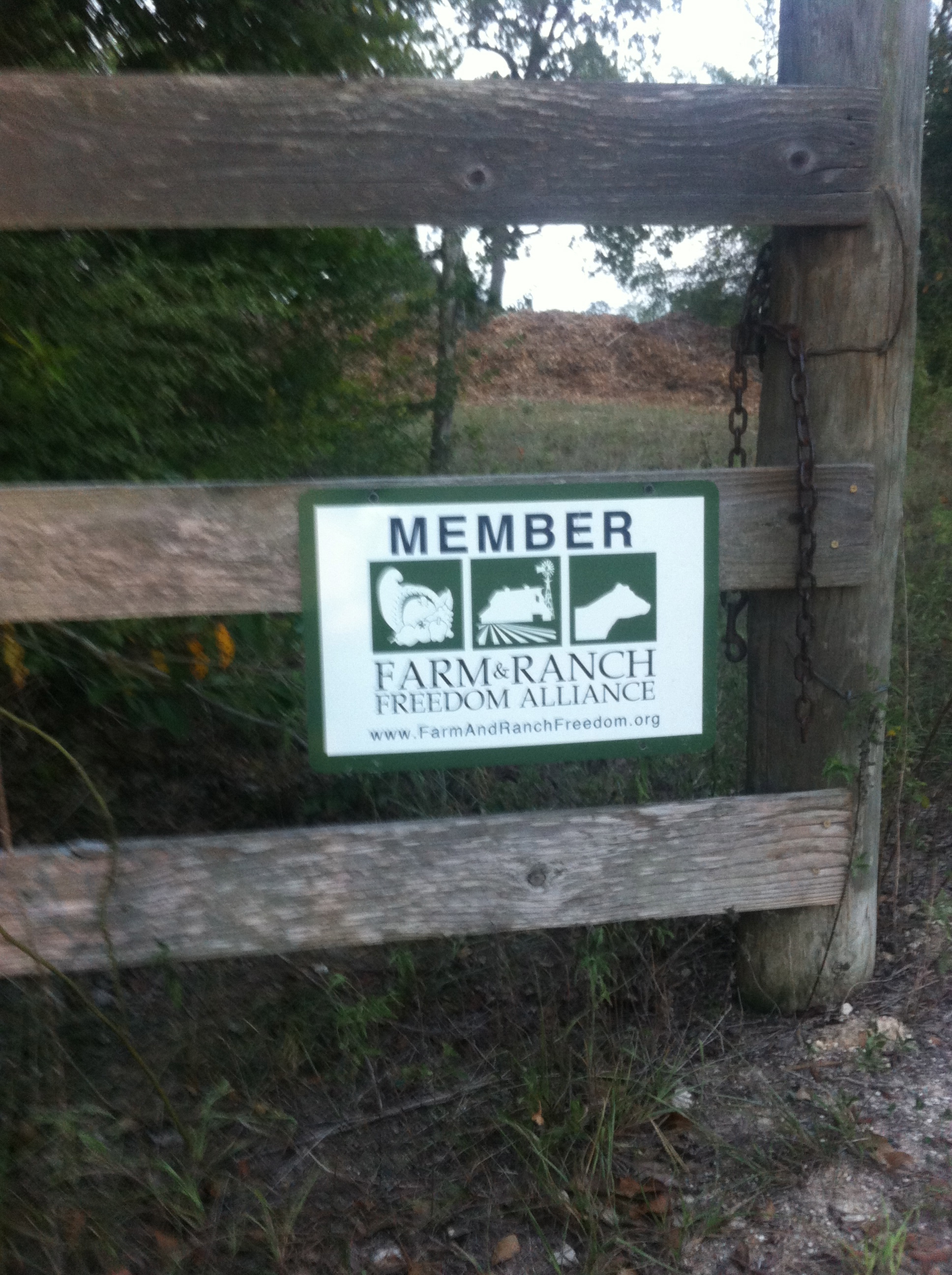
Come to the Farm and Ranch Freedom Alliance annual conference in Bastrop Sept 22 and 23 and help advocate your vision.
 Laughing Frog Farm